Which Cloud Agent Platforms Engineering Teams Wire to GitHub and Slack Today
A comparison of Slack Code, Copilot, Claude Code, and Cursor setups.
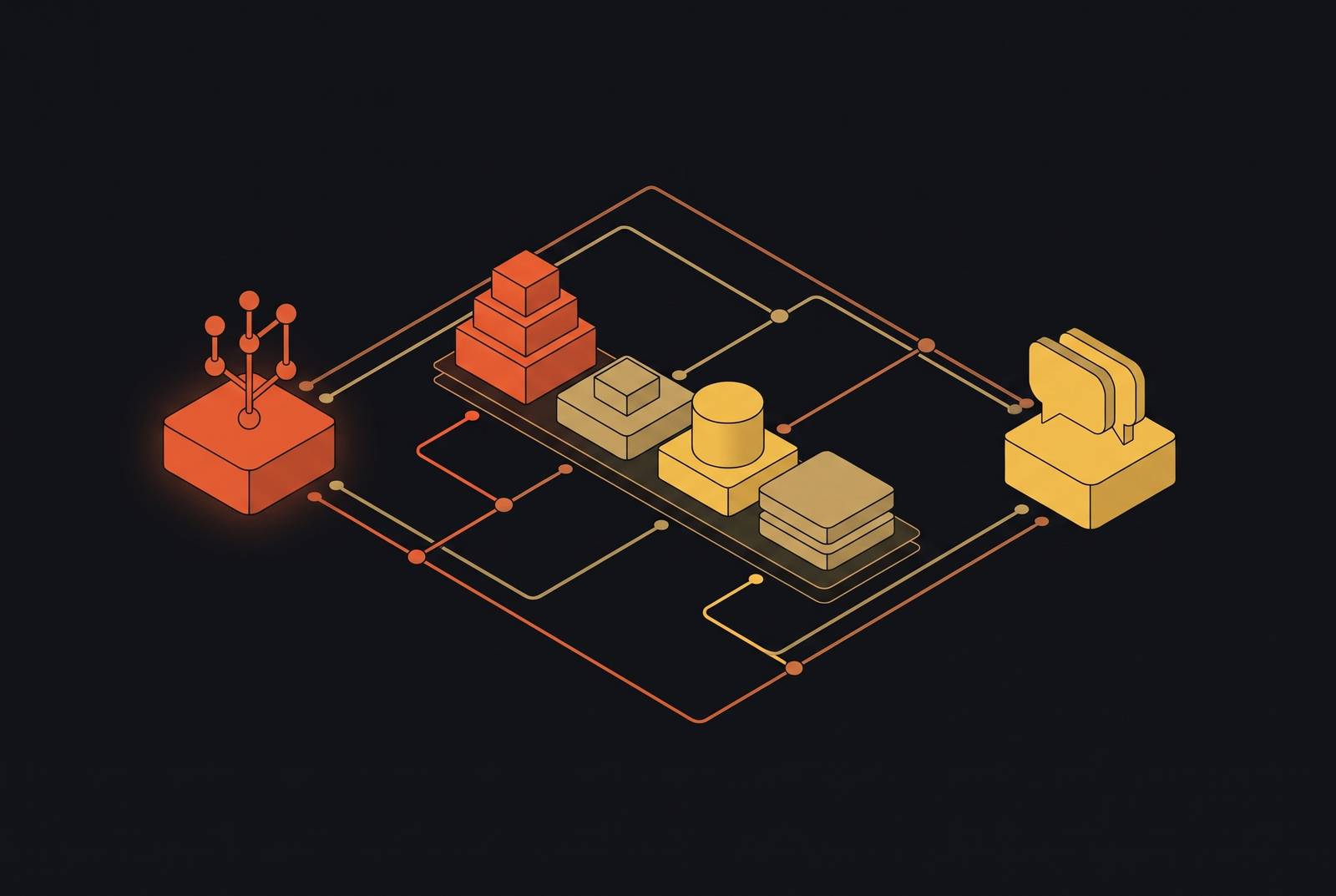
GitHub Copilot’s Slack and Teams integration is the most GitHub-native option for teams already using Copilot, while Slack Code provides a shared workspace around several supported agents. Claude Code and Cursor also offer self-hosted execution options, with different limits on what stays inside the customer’s network. The best cloud coding agent platform for a team depends on which agents it wants, what repository permissions it has, and how well it can review the pull requests.
Why engineering teams are moving agent delegation out of the terminal and into shared tools
One developer gives an agent a task, works through its assumptions, and posts the result later. Teammates see the pull request but may never see the intermediate plan or changes in scope. Moving delegation into Slack threads and GitHub issues makes that work visible earlier, so others can inspect the plan and steer the task before the result reaches review.
Salesforce’s Slack Code announcement describes this shift as a move from copilots for each person to team ROI, with agents working in shared channels under the enterprise security controls already in place. That changes what teams are choosing. Slack and GitHub provide shared control surfaces, while cloud platforms run agent CLIs in isolated infrastructure so sessions can outlive a developer’s laptop session. The coordination layer therefore determines not just where a task starts, but what visibility, governance, and parallel work the team gets.
What Slack Code actually is and what it changes for a team
Slack Code is a collaboration and governance layer around existing coding agents. Announced August 20, 2026, it is available across all Slack plans, but teams still need separate access to the agents they use. Its supported ecosystem includes Claude Code, Devin, GitHub Copilot, ChatGPT, and Vercel agents. Choosing Slack as the shared workspace does not remove the need to manage each integration.
The workflow begins by tagging a supported agent from a Slack conversation. That creates a dedicated code channel containing tabs for the conversation, the agent’s plan, line-by-line code diffs, and a live output preview. The work is visible while it is happening. Anyone in the channel can pause, redirect, or stop the agent, but changes still need human sign-off before they reach production. Finished channels archive with a searchable record of the context, plan, and shipped work.
Slack Code’s governance claim rests on agents inheriting Slack’s existing security model and admin permissions within the existing approval chain. Repository authorization is a separate boundary. Membership in a Slack channel does not establish permission to write to a GitHub repository, even when that channel is where the task begins. Product managers and designers can start work and review the output without getting repository write access. The practical distinction is between permission to request a change, permission to execute it, and authority to approve its release.
How GitHub Copilot’s Slack and Teams integration works in practice
Participants need write access to the repository before they can trigger Copilot to make changes. Chat participation alone is not sufficient authorization. For teams evaluating the integration, that rule connects the shared conversation to the repository’s access model. It also distinguishes the Teams workflow from the broader ability to initiate work described for Slack Code.
In Slack, a session starts by mentioning @GitHub in a direct message, channel, or thread. Copilot can answer code questions, triage bug reports, create or update issues, investigate failures, and implement changes in a cloud sandbox before opening a pull request. The session continues asynchronously after the initial request. People in the thread can steer it as it works, so the conversation is a place to guide the work as well as receive notifications.
That shared workflow puts context and attribution under scrutiny. The supplied information does not establish the exact scope of thread context captured or the app identity used for attribution, so neither should be inferred from the ability to mention @GitHub. The practical recommendation is to confirm that the additional-approval rule is configured for agent-attributed pull requests before enabling write-capable sessions at scale. Starting a task from chat does not settle who must review its output.
Which cloud coding platforms let teams choose the agent and execution environment?
The deeper architecture choice is where the agent executes. With vendor-managed infrastructure, teams can hand off cloud sessions without running the execution environment themselves, while self-hosted options bring some of that work inside the team’s network. These are not interchangeable security models. The useful comparison separates execution from orchestration, planning, and model inference, because a product described as self-hosted may keep only part of the workflow under customer control.
Anthropic opened a public beta of self-hosted environments for Claude Code on August 6, 2026. Team and Enterprise organizations can route cloud sessions to servers inside their own network, but model inference remains with Anthropic. It cannot be routed through Amazon Bedrock, Google Cloud’s Agent Platform, Microsoft Foundry, or an LLM gateway. Faire’s senior engineering manager George Jacob described the benefit in the announcement. “Self-hosted environments let us integrate Claude Code into our existing development workflows while maintaining our security and operational controls.”
Cursor draws the boundary in a related but distinct way. Its self-hosted workers keep execution in the customer’s network, while orchestration, inference, and planning remain in Cursor’s cloud. A team that needs local execution has to choose on different grounds from one that needs control over the inference route. The platform comparison has to preserve that distinction.
With a bring-your-own-model account, model charges stay with the team’s subscriptions and keys, and the team pays for compute when agents use it but pays nothing while workspaces sleep. That separates compute spending from model spending. Committing to one agent may simplify the initial workflow, but changes in pricing, capability, and availability have already forced teams to migrate between agent CLIs. Those changes are harder to handle when the environment is tied to a single harness.
Connecting the agent workflow to Linear, Sentry, and the rest of the SDLC toolchain
The starting point for engineering work is often outside GitHub. A problem may first appear as a Linear issue, a Sentry error, or a support escalation in Slack. When only the final pull request is connected, that earlier context is left out. The platform’s integration reach determines how much of the path from report to proposed fix can run without custom glue code.
Linear Agent can look into a newly reported issue and try to fix it before it reaches an engineer. It gathers evidence from tools such as Sentry or Datadog through MCP and inspects the codebase to trace the root cause. Linear uses this workflow internally to resolve roughly a third of incoming bug reports, mostly on the first pass. Its agents page connects Codex, Cursor, GitHub Copilot, Factory, and Devin, while Claude, ChatGPT, Windsurf, and Replit connect through the Linear MCP server. These are distinct integration routes.
Sentry’s Seer workflow extends the connection into review coordination. Seer posts to a dedicated Slack channel whenever it opens a new pull request. A Claude routine runs hourly, checks the feed for PRs unactioned in the last four hours, and asks Seer who is best suited to review them. Seer uses GitHub commit history to identify the engineer who worked most closely with the code flagged in its root cause analysis.
Macroscope’s custom check-run agents connect related evidence during PR review. A single agent can inspect a diff, query Sentry errors for a modified file over a defined window, verify the relevant LaunchDarkly flag, and post a summary to Slack. That is a different integration need from starting an agent through a chat mention. For platform selection, teams should map their required connections, including Linear MCP, Sentry webhooks, and Jira cross-reference, against native support and custom integration work.
The governance gap that the platforms’ marketing does not close
Generating more pull requests does not establish greater engineering throughput. How much the team gains depends on how quickly and accurately people review those changes. Agentic pull requests wait far longer for a reviewer to pick them up than human-authored PRs, and bot-authored code is accepted at a substantially lower rate. More output can therefore increase the verification backlog while leaving the amount of production-safe work unchanged. Raw PR volume is an incomplete measure of value.
The documented controls act at different points in that process. Slack Code’s pause and stop controls work while the agent runs, and its archived channels keep the task’s context and plan. Teams’ repository write-access requirement restricts who can trigger changes. An additional-approval rule governs the review of agent-attributed pull requests, and human sign-off separates generated output from production. None of these controls substitutes for the others, because each addresses a different decision or boundary.
Keeping execution inside the customer’s network does not show that inference stays there, and an audit trail does not show that a reviewer has checked a change. Teams that audit their controls before scaling are better positioned to sustain the workflow than those forced to retreat after a governance incident.
Before enabling write-capable agent sessions, which of these controls has the team actually configured?
How to evaluate the options against your team’s actual constraints
The decision framework begins with three constraints, namely the agents a team wants to use, the controls its security posture requires, and the tools where work originates. Those constraints narrow the architecture before feature comparisons begin. A team committed to GitHub Copilot and already on Business or Enterprise plans gets the most GitHub-native path through its Slack and Teams integration, with no additional platform required. A team that chooses Slack Code gets a shared layer where it can work with supported agents, but it still has to get access to those agents and manage each integration separately.
For teams with tighter infrastructure requirements, the next step is to distinguish local execution from control over inference and orchestration. Claude Code’s self-hosted environments and Cursor’s self-hosted workers expose different boundaries, so the label alone cannot settle the choice. Procurement requirements need the same precision. Teams requiring SOC 2, SCIM, or audit logs should verify that those controls are included in a tier they can afford, rather than gated behind an enterprise services engagement. Teams with write-capable deployments should also check the additional-approval rule for agent-attributed PRs before they scale up.
The toolchain audit then tests the proposed workflow against where tasks actually begin. Teams that work from Linear issues should check which agents connect through its agents page and which need its MCP server. Teams working from Sentry alerts or Slack threads should map the route from alert to agent session to pull request. A platform that supports on-demand sessions is not, on that basis alone, a fit for workflows requiring event-driven or scheduled agent runs.
The first agent-authored pull requests should be a calibration exercise. Teams should measure how long those PRs wait for review, what fraction are accepted on the first pass, and whether the configured controls catch the issues they were intended to catch. These measures test the whole workflow, including the human work after generation. A platform’s claims about speed cannot provide that evidence. The decision to scale should follow the pull requests shipped and reviewed.