Every Model One Platform Claude Code Codex Cursor and OpenCode Each Returning a Pull Request
Four coding agents deliver the same pull request, but they differ in how they run.
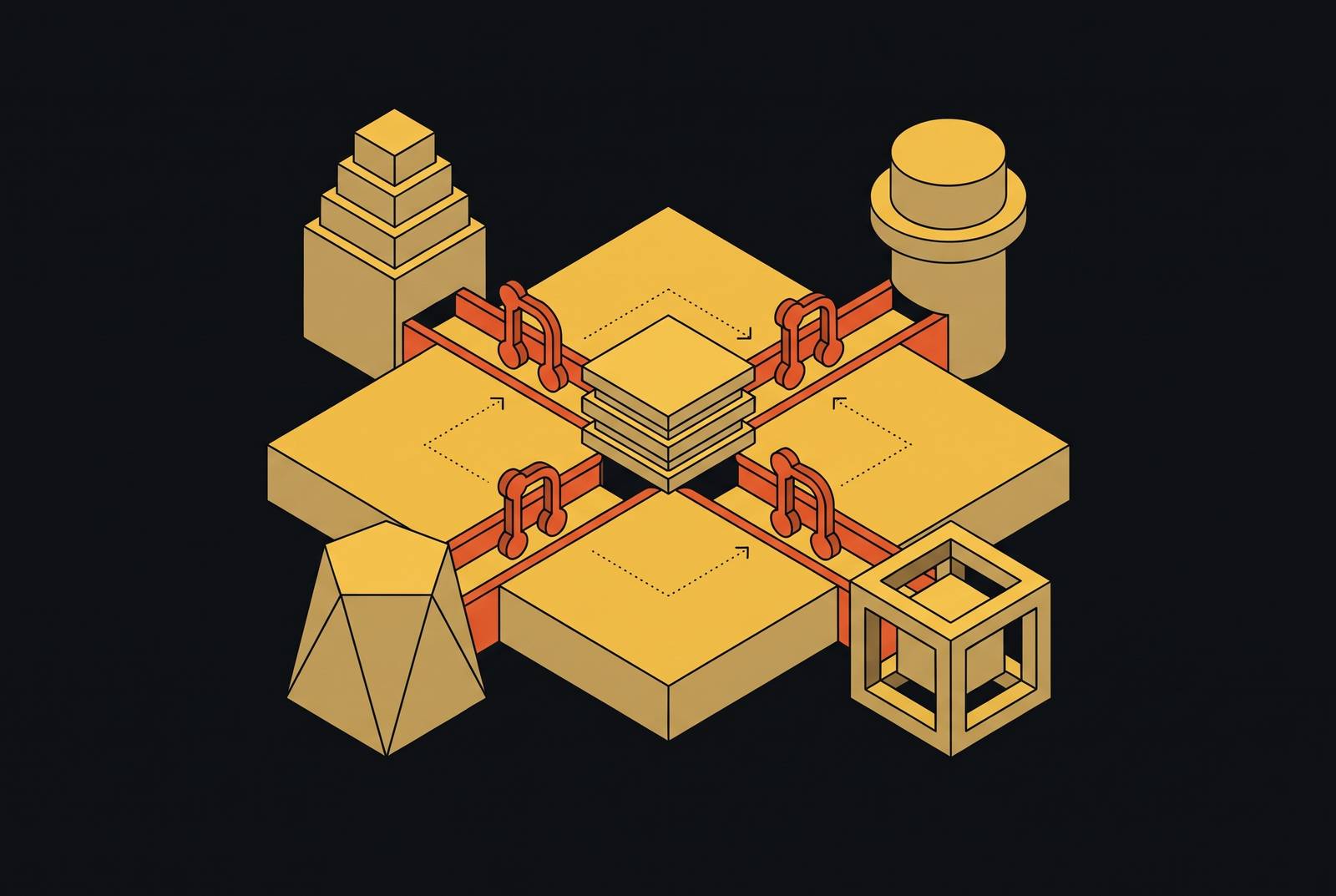
To run Claude Code in the cloud without managing infrastructure, teams can use its Anthropic-managed cloud sessions. For teams that also use Codex, Cursor, and OpenCode, a single platform can provide a stable operating layer across all four. The central requirement is to preserve their shared deliverable, a reviewable pull request, while normalizing task dispatch, credentials, isolation, and visibility.
Why all four agents converge on the pull request as their unit of output
A pull request lets the team review agent-generated work through the process it already uses. Claude Code, Codex, Cursor, and OpenCode each support a workflow that clones a repository into an isolated environment, makes changes, runs tests, and presents a branch and PR. The handoff is a governance boundary. An agent can execute the work, but the team retains judgment over whether the change belongs in the codebase.
That shared contract lets teams try different agents while keeping their branch protections and CI/CD pipelines. It does not mean every invocation automatically opens a PR. Codex, for example, supports workflows where opening one is a deliberate step after reviewing the result. Shared output makes the agents comparable, but not interchangeable.
How to run Claude Code in the cloud and understand its parallel execution model
Claude Code cloud sessions became generally available in September 2026. Each session runs in a fresh Anthropic-managed Ubuntu 24.04 VM, with the GitHub repository cloned and common toolchains pre-installed. The VM is reclaimed when the session goes idle. This gives teams a managed execution environment rather than a machine they must provision and maintain. Sessions are available through claude.ai/code, the Claude mobile app, the Claude desktop app, or the terminal command claude --cloud.
The terminal also provides a handoff through claude --teleport. That move works in one direction only. A cloud session can move into the local terminal, but a local session cannot move into the cloud through the same mechanism. After PR creation, an auto-fix option can watch for CI failures and review comments and respond without requiring a new session. Its work can therefore extend beyond the first proposed change.
Claude Code offers the broadest set of parallel execution modes among these four agents. That breadth comes with a shared usage constraint. Cloud sessions are included in Pro, Max, Ultra, and Team plans, and for Enterprise users with premium seats or Chat + Claude Code seats, without a separate compute charge. Usage counts against plan rate limits, so sustained parallel sessions compete with other Claude work.
Team and Enterprise organizations can also route sessions to self-hosted environments on their own servers. Checkouts and build artifacts then remain inside the company network. The boundary is not end-to-end local execution, however. Prompts, responses, tool results, and session transcripts still route to Anthropic, while session orchestration and queueing remain on its control plane.
How Codex isolates tasks and where its offline-by-default posture creates a real trade-off
Codex’s defining distinction is the network boundary between setup and execution. The official Codex Cloud documentation states that setup scripts can access the internet to install dependencies, while the agent phase blocks internet access by default. This is the strongest default network-isolation posture among the four. Its trade-off is equally concrete. A task that needs a missing package after setup cannot fetch it while operating offline.
The execution terminology deserves precision as well. OpenAI’s current help article describes OpenAI-managed computers and recoverable VM state. Tasks run asynchronously, so engineers can submit work at the same time, each in an isolated execution session. Both let work run independently, but this parallelism differs from Claude Code’s range of concurrent-work modes.
Codex accepts tasks through its web interface and the ChatGPT desktop app. To use it on mobile, users must pair it with a desktop app host through a QR code. Enterprise workspaces can also start coding tasks through @ChatGPT in Slack or Microsoft Teams. On a GitHub pull request, an @codex mention other than review starts a legacy cloud chat using the PR as context, while @codex review requests a code review.
Network isolation does not establish data residency. Source code is transmitted to OpenAI infrastructure during execution, so teams with strict residency requirements must assess that separately from the offline agent phase. OpenAI’s Enterprise admin guide places repository-access restrictions in the source system, and managed configuration can restrict command approval policies. Those controls address access and execution.
How Cursor’s cloud agents added browser access and self-hosted workers, and why those additions changed its enterprise story
Cursor’s February 2026 “Cloud Agents with Computer Use” update expanded what an agent could verify during execution. Each cloud agent received its own VM with browser access, screenshots, and video recording. Cursor is the only one of these four that can interact with a browser during a task and put visual evidence in the PR. That changes the evidence available to a reviewer. A background agent can write a Playwright test, run it in a headless browser, capture a screenshot, and include it in the PR description.
The output is still a pull request, but the reviewer can inspect evidence beyond the code change and test result. Browser access is therefore an execution capability. It distinguishes Cursor from agents whose relevant differences lie primarily in model coupling, concurrency, or network restrictions.
Self-hosted workers address a separate enterprise concern. They let execution keep the codebase inside the company network while Cursor’s cloud retains orchestration. Local execution is not the same as local processing throughout. The task plan and model calls do not stay inside that boundary, leaving an open question for teams with end-to-end data-residency requirements.
How OpenCode’s model-agnosticism and GitHub Actions integration make it the agent teams already own
OpenCode changes the ownership model rather than adding another vendor-managed environment. OpenCode’s permissive license and model-agnostic harness let teams choose the model and run work on infrastructure they already operate, including GitHub Actions runners. The harness itself has no agent licensing cost. That does not make the whole workflow cost-free, because model use and execution remain separate from the license.
A team that prefers GitHub Actions for compliance or operational reasons can keep that execution choice. Model selection is also independent of the harness. This separates two decisions that are more closely linked in Claude Code and Codex, namely how the agent operates and which model performs the reasoning.
That freedom transfers responsibility back to the team. Without a managed environment, runner configuration, secrets management, and dependency installation become its work. Output quality also depends on the selected model, so evaluating the harness alone cannot establish the quality of the resulting PRs.
The four dimensions that actually separate the agents
Model coupling asks how tightly the harness is bound to its model. OpenCode makes that choice explicitly separable, while Claude Code and Codex are more closely tied to their respective vendors. This distinction affects how a team can change models without changing the rest of its agent workflow.
Execution environment asks where the work runs and what it can do there. Claude Code has managed VMs and a self-hosted option, while Codex runs work in an isolated managed environment with an offline-by-default agent phase. Cursor can interact with a browser and has self-hosted workers, while OpenCode runs in the team’s CI environment. These are different operating trade-offs.
Trigger surface is how work gets into those environments. Claude Code exposes cloud sessions across web, apps, and terminal, while Codex combines its interfaces with collaboration and GitHub entry points. OpenCode’s GitHub Actions integration places execution within CI. A trigger is not merely a convenience when teams must support several agents, because each separate entry point adds another workflow to operate.
Enterprise posture asks which boundaries a deployment actually preserves. An offline agent can still process code on vendor infrastructure, and a self-hosted worker can still depend on external orchestration and model calls. These distinctions prevent “isolated” or “self-hosted” from becoming substitutes for a security assessment. No single agent dominates across all four dimensions, which makes support for more than one a practical requirement for varied workloads.
What running all four from a single platform resolves, and what it requires from the platform
Running all four agents natively gives a team four operational surfaces to manage, along with their credential stores and streams of PR notifications. A common platform can normalize those differences without making the agents behave identically. Its job is operational consistency. Codex’s network posture and Cursor’s browser capability still affect what each can do when both use the same task interface.
The platform must first provide isolated execution for each run. Each agent should have its own cloud VM so that a compromised or runaway session cannot affect another agent’s work or the host environment. Parallel dispatch must preserve that separation. Independent runs should return independent PRs, allowing the team to assess each result without combining the agents’ working environments.
Work should enter through Slack, Linear, GitHub, GitLab, schedules, and webhooks regardless of which agent receives it. Secrets should live in the platform rather than being replicated across four configurations. Teams also need repository-level agent restrictions. A common dispatch surface is incomplete if it cannot govern which agent may touch which codebase.
If Codex does a particular task better than Claude Code, teams should be able to switch to it while keeping their integrations and trigger configuration and without retraining users. Review remains outside that substitution. Every result should appear as a PR that the team can merge, comment on, or send back.
This stable layer reduces model lock-in and fragmented visibility. The team can swap harnesses and models while preserving how work is requested and judged. That is the substantive meaning of treating the agent as replaceable. It does not imply equal capabilities, only that a change in capability need not force a change in operating process.
How teams should decide which agent handles which task, and when to run more than one
Assign agents by task requirements. Teams should use Claude Code for deep, multi-step work across a large codebase, work that benefits from its parallel execution modes, or changes needing autonomous responses to CI failures after the initial PR. Codex is a good fit for well-scoped tasks that can run offline or need strong network isolation while they run. The distinction is the task’s operating needs. Neither choice establishes a general model-quality ranking.
Teams should use Cursor when UI or browser-dependent behavior needs visual verification in the PR, or when self-hosted workers are required to keep codebase artifacts inside the network. OpenCode fits teams prioritizing model flexibility, avoiding agent licensing costs, or preferring execution in existing GitHub Actions runners. Those choices retain their respective obligations. Cursor’s orchestration boundary still needs assessment, while OpenCode still requires the team to manage its execution environment.
When two agents can produce the required deliverable, teams should run the same task through both in parallel, compare the PRs, and merge the better one. A unified trigger and isolated runs make that comparison practical without separate dispatch workflows. Review capacity must grow with dispatch capacity. Teams scaling parallel work should plan for the human review bottleneck rather than treat faster generation as completed delivery.
Scheduled and event-driven triggers extend this operating model beyond manual requests. Production alerts, CI failures, and Linear tickets can start work outside working hours, so people have less work to dispatch themselves. The platform’s role is to make that intake consistent while preserving each agent’s useful differences. The pull request remains the point where those differences become a concrete change the team can judge.