Isolation Architecture as the Real Selection Criterion for Managed Cloud Agent Platforms
Where an agent's shell runs, and who owns that boundary, matters most.
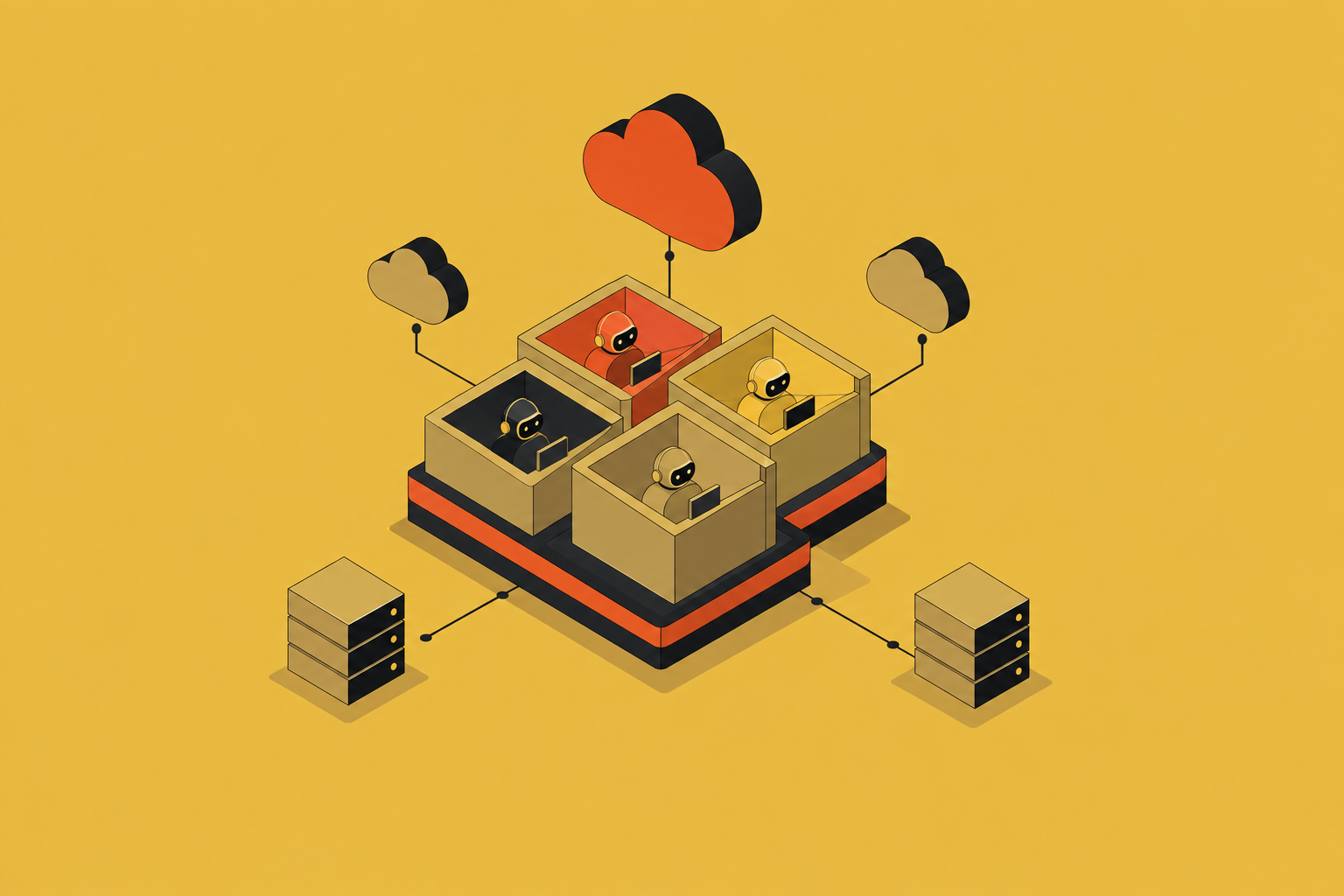
The best cloud coding agents for engineering teams run on execution platforms that keep tasks isolated, control access, and let people review the work. Selection should start with where shell commands run and who controls that boundary.
Why execution environment matters more than agent capability when coding agents have shell access
A coding agent can modify files, run programs, and reach internal services. Claude Code, for example, has read/write filesystem access, shell command execution, git operations, and MCP server integrations running directly on the host. A compromised session therefore exposes a machine. Selection depends on which resources that session can reach and what prevents its mistakes from spreading.
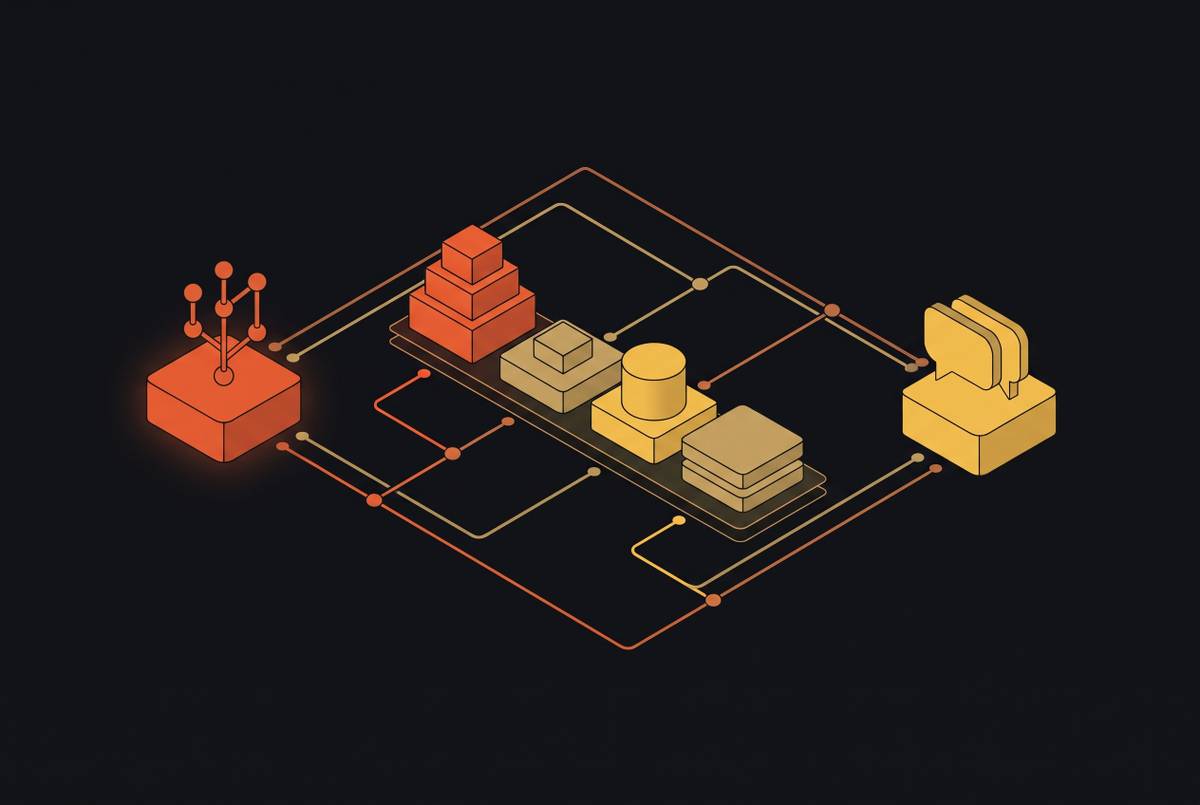
That shift is separating reasoning from execution. Cloudflare’s September 2, 2026 announcement described Cursor Cloud Agents running on Cloudflare Sandboxes, with Cursor handling the agent loop, planning, and orchestration. Terminal, filesystem, and browser actions, repositories, build caches, and secrets remain in the customer’s execution environment. The AI provider manages reasoning while the customer controls the execution boundary. This split gives enterprises a way to change agent capability without surrendering control over where actions occur.
The sandbox spectrum from OS process to hardware-virtualized microVM
A key difference between isolation architectures is whether they share a kernel. Claude Code’s official secure-deployment documentation lists four tiers, which are Sandbox runtime, Containers (Docker), gVisor, and VMs (Firecracker/QEMU). The documentation rates gVisor and VMs “Excellent” for isolation and sandbox runtime “Good”. Engineers must assess what an attacker must cross to reach the host or another workload.
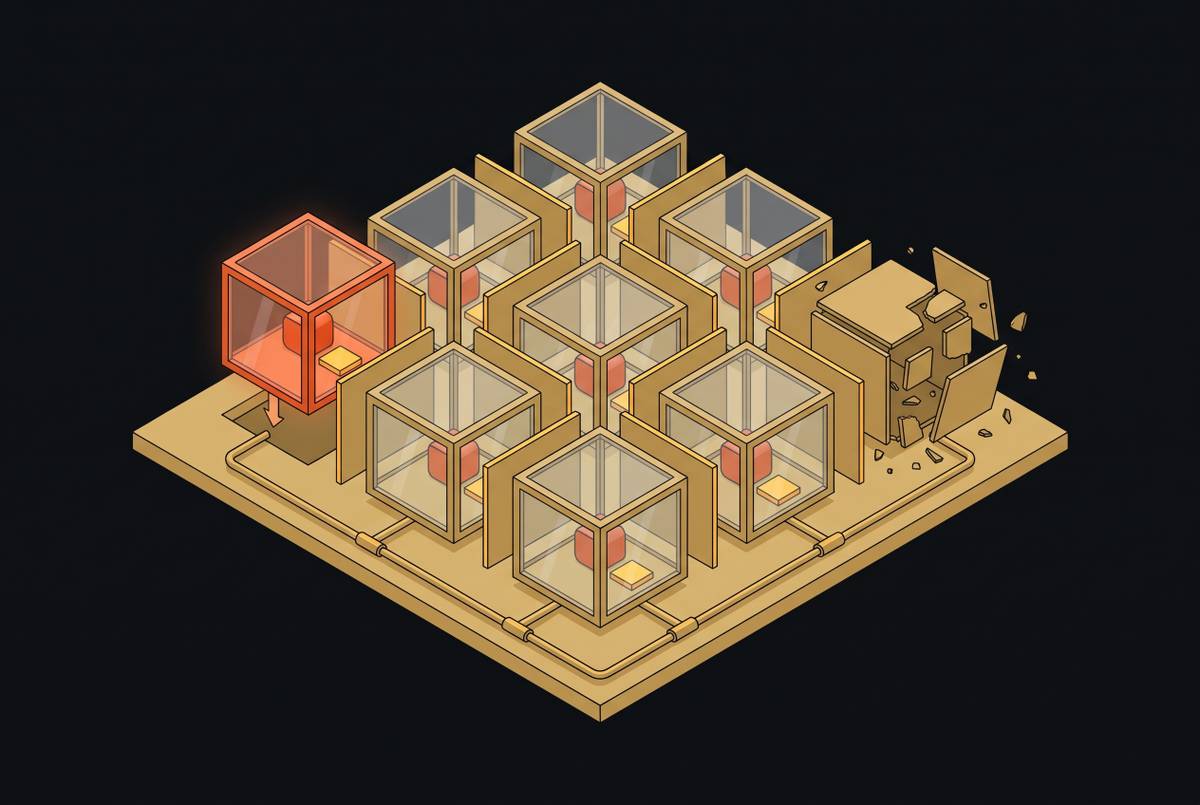
Docker containers use Linux namespaces and cgroups but share the host kernel, so a kernel exploit can escape the container. gVisor instead interposes a userspace kernel that intercepts syscalls, eliminating most kernel-exploit paths at the cost of syscall overhead. It does not use full hardware virtualization. Firecracker microVMs give each VM its own kernel and a hardware-virtualized boundary, with boot times under 150ms and under 5MB RAM overhead. The distinction is between restricting access to a shared kernel and separating kernels.
In order of frequency, the threat categories in the brief are filesystem damage, network exfiltration, privilege escalation, and resource exhaustion. An agent can overwrite files outside its task or fill the disk without exploiting the kernel. Isolation must therefore work with resource and access controls. Agyn’s platform paper adds the organizational requirement of deny-by-default, per-identity authorization because an agent inside the network is not automatically trustworthy.
What agents can actually do when they reach internal services, and what breaks when no boundary exists
Vellum doubled PR throughput by treating agents as contributors with access to the context engineers use. Its agents were wired into Linear and Slack and expected to follow the same conventions. That context made broader delegation practical over time. Test writing and straightforward feature changes became classes of work that could be handed off.
Broader adoption also increases the need for controls. Faros AI instrumented developers across thousands of teams and found rising throughput per engineer together with sharp increases in code churn, the incidents-to-PR ratio, per-developer defects, median review duration, and PRs merged with zero review. Those findings show why throughput alone is an incomplete success measure.
Agyn’s paper identifies a related exposure when one agent definition spawns many concurrent instances with ambient access to databases, APIs, and message queues. A compromised definition can then put the whole organization at risk unless each request is authorized per identity. Per-workspace containment addresses one part of that problem. Reviewable pull requests, audit trails, and scoped service access address the rest, allowing increased delegation without leaving responsibility undefined.
How do the leading managed cloud agent platforms compare on isolation, persistence, and execution location?
Northflank Cloud Harnesses provides microVM isolation per harness and supports Claude Code, Codex, Cursor, OpenCode, Pi, and bring-your-own agents. Its workspaces survive pauses, restarts, and redeployments. Interactive access is available through a web terminal and SSH, while an API supports programmatic harness management. Teams can choose who has access through team and private modes and public or private networking ports. Self-serve BYOC supports AWS, GCP, Azure, Oracle, and CoreWeave.
Cursor’s arrangement with Cloudflare expresses a different separation of responsibilities. Cursor supplies the managed agent loop, while customer execution runs on Sandboxes. That establishes where actions occur without making the two offerings architecturally identical. Equivalent kernel isolation, workspace persistence, and idle billing for this arrangement require verification beyond the supplied details and the word “sandbox”.
The useful comparison is therefore not simply agent support. Engineering teams need to know how a kernel boundary differs from a namespace, how running in a customer account differs from running in a vendor account, and how keeping workspaces differs from paying for compute around the clock. Northflank specifies per-harness microVM isolation and persistence in the supplied material. The Cursor arrangement specifies the reasoning-execution split. Those details still leave questions about governance and cost.
What the BYOC model closes that neither vendor-managed cloud nor local deployment can solve
Teams in regulated environments have more choices than running agents in a vendor-managed cloud or on local laptops. BYOC runs the work inside the enterprise’s own VPC, so the team does not have to build the execution infrastructure. The enterprise retains control of the execution residency boundary. Local deployment avoids a vendor-hosted runtime, but it does not itself provide the managed execution layer that makes cloud delegation practical.
Model-side controls do not establish that execution boundary. Claude Code deployments through AWS Bedrock or Google Vertex AI can keep traffic off the public internet, but VPC isolation and private endpoints require explicit configuration. They are not enabled by default. Qualified Enterprise accounts can use Zero-Data-Retention mode, but Anthropic’s account team must turn it on for each organization. These controls govern the model API.
BYOC also does not automatically constrain internal access. Agyn’s paper calls for every service request to be authorized per identity, with credentials kept from the model and access denied by default. The corresponding governance requirement is task-scoped repository access, test-environment database access, short-lived secrets, allowlisted networking, and approval for production access. Residency and authorization solve different problems. The reasoning-execution split makes them manageable without requiring the enterprise to operate the agent loop itself.
How governance controls — audit logs, SCIM, secret scoping, and reviewable PRs — attach to isolation architecture
An isolated VM contains a failure but does not make activity auditable. Governance must be part of the platform. Agyn’s paper proposes agent definition as code, with prompts, tools, secret bindings, and resource bounds version-controlled and peer-reviewed before deployment. These definitions make operational decisions with production consequences. Reviewing them applies infrastructure governance to the instructions and permissions that agents receive.
Credentials are injected at runtime, limited to the task, short-lived, and never exposed to the model. The platform enforces those restrictions rather than relying on the agent developer’s discipline. Audit logs make session activity available for scrutiny, while SCIM, self-hosting, and SOC 2 belong in the platform’s standard enterprise offering. Whether MCP calls are logged and activity can reach a SIEM remains a concrete evaluation question.
Linear’s internal workflow resolves roughly a third of incoming bug reports by investigating, gathering evidence from Sentry or Datadog through MCP, tracing root cause, and producing a fix. A human reviews before merge. The unit of work is therefore something a person can merge, comment on, or send back.
Parallel agent workflows and the orchestration layer that isolation makes possible
Per-agent execution boundaries make parallel work operationally tractable. Without them, tests, ports, dependencies, and credentials can collide through shared state. Fan-out separates a migration or test expansion into independent tasks, each producing a pull request. A pipeline passes artifacts that people can review between the specification, implementation, review, and CI stages. Event-driven execution starts isolated workspaces from issues, failed builds, alerts, comments, or schedules, while a supervisor delegates subtasks and combines results.
Ramp built Inspect on Linear’s API to connect specifications, customer feedback, and code, and it now writes the majority of pull requests Ramp merges. Coinbase built Forge as a custom agentic harness callable from Slack, GitHub, or Linear. These are integration patterns.
Isolation alone does not coordinate those jobs. The orchestration layer needs a shared task queue, repeatable environment setup, CI verification, and a reviewer other than the agent that wrote the change. It also needs visibility into what each agent is doing, who started it, and what it cost. The benefit is not merely faster generation but the ability to delegate independent tasks without sharing their execution state.
Pricing models that follow compute rather than tokens, and why the billing unit matters for parallel workloads
Compute billing charges for the time a workspace runs, while token billing charges for model calls regardless of the execution environment’s cost. Parallelism exposes this difference quickly. Concurrent sessions can accumulate model usage independently, while workspace billing depends on runtime and whether idle environments sleep. A subscription label alone does not explain either curve.
Devin’s April 2026 repricing moved from a high enterprise floor to a low monthly base with included usage quotas and additional usage billed in dollars. ACU billing was retired for self-serve and retained for Enterprise. Task complexity still affects consumption. A typical bug fix can consume substantially less usage than a complex feature, and Devin added budget caps in Enterprise beta in October 2026 after reports of surprise bills.
Cursor’s pricing follows a different unit. Since October 12, 2026, new customers buy through The X Subscription’s Premium tier, while legacy Pro is grandfathered for existing subscribers. Pro+ gives users roughly triple the Agent usage, and Ultra gives them more usage and priority features. This is token billing bundled into a subscription. For scheduled, parallel work, compute billing with sleep-when-idle tracks more closely how long workspaces are active, so it fits event-driven execution as well as synchronous interaction.
Reading isolation architecture as a first-order signal — the questions to put to any managed cloud agent platform
Does each agent get its own kernel, or share a host kernel? Can execution run inside the customer’s cloud account through self-serve BYOC? Are secrets injected per task without exposure to the model? Are MCP tool calls logged and session records exportable to a SIEM? Does billing stop when workspaces sleep?
The strongest objection is that isolation cannot address the whole threat surface. The agent harness, the model provider’s infrastructure, and the packages an agent installs can each have their own vulnerabilities. That valid objection broadens the scope while leaving isolation’s priority intact. Isolation is the minimum foundation for containing failures, while authorization, auditability, and review govern what happens within it. Once a platform has answered the boundary questions, teams have a basis for checking the risks that remain.
Their approaches cover different parts of the boundary, and the choice of agent still matters. Teams should be able to switch agents and models without changing how work is governed. The platform that outlasts any single harness is the one that controls the execution boundary.
Sources
- Agyn: An Open-Source Platform for AI Agents with Scalable On-Demand Execution, Agent Definition as a Code, and Zero-Trust Access
- Agent Orchestration: 9 Platforms for Coding Agents (2026)
- The Balkanization of Execution-Security Research for AI Coding Agents: Isolation, Access Control, and Time-of-Check-to-Time-of-Use Vulnerabilities