Why Isolated VM per Task Is the Architecture That Lets Teams Skip Agent Infrastructure
Isolated VMs eliminate the infrastructure work of managing shared agent execution environments.
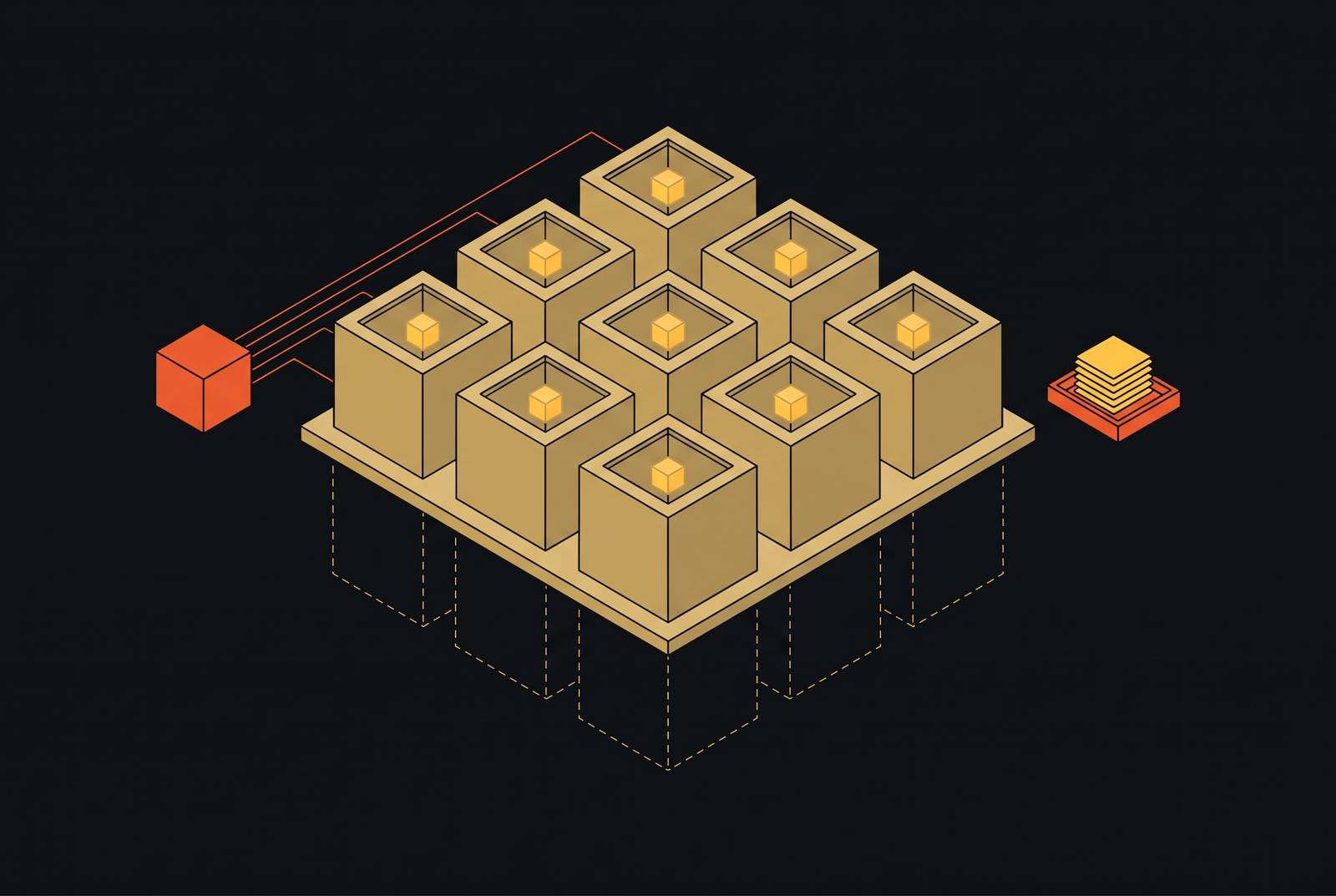
Engineering teams can run cloud coding agents without having to maintain an execution layer if they choose harnesses that give each task a fresh, fully configured VM. Cursor Cloud Agents, OpenAI Codex Cloud, and Claude Code on the web implement this model. The same boundary that isolates agent commands also removes the need to clean up shared environments, reconcile their accumulated state, and provision execution infrastructure for each new task.
Why agent tasks that share an environment corrupt each other's work
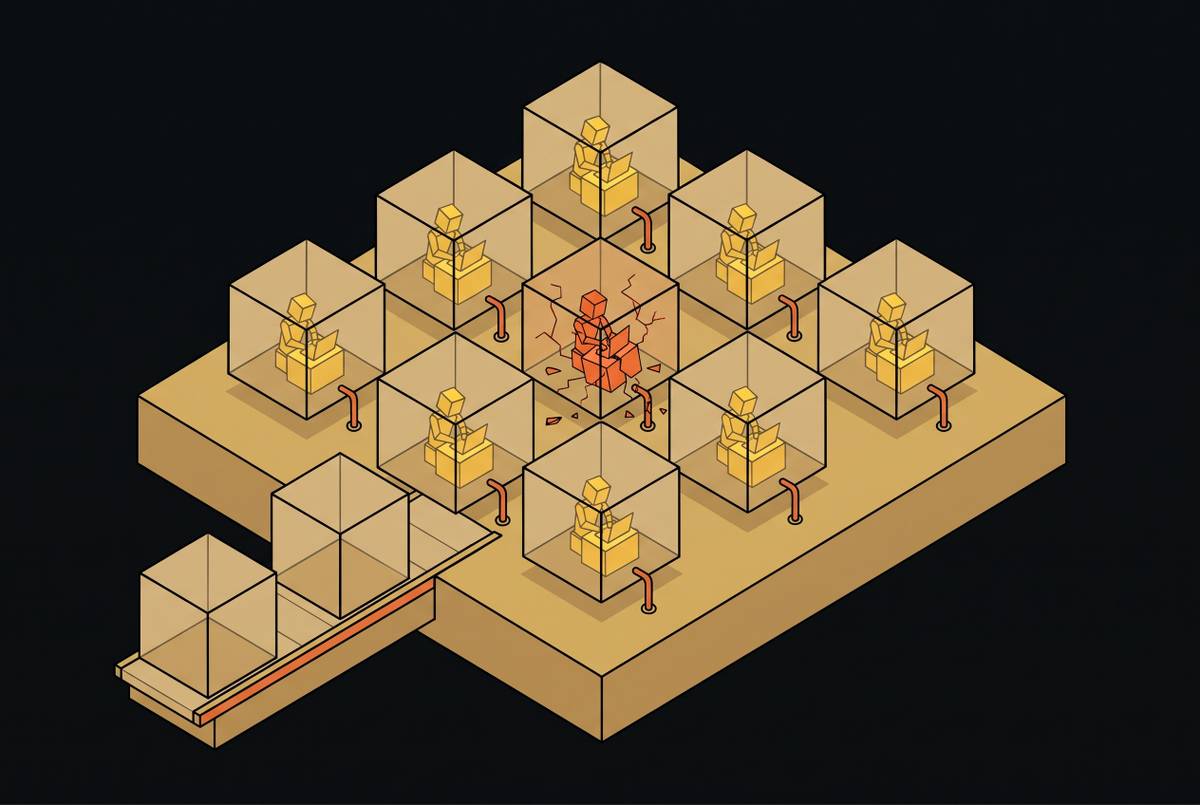
Two agents that edit the same working directory can corrupt each other’s code without a clean failure. One task may check out a branch while another is writing files or running tests against that directory. These overlapping operations can produce unpredictable output without an obvious error message, so a completed command does not establish that the task ran against the intended code.
The AQ workspace docs identify this collision as the reason platforms running concurrent agents need workspace isolation. Shared state also outlives the collision itself. Dependencies installed for one task stay into the next, abandoned branches leave files behind, and credentials added earlier can still be used. Each subsequent task therefore inherits an environment whose history is opaque, making it difficult to distinguish a defect in the requested change from a side effect of earlier work.
The three isolation strategies teams have converged on, and what each one trades away
The AQ docs identify three approaches to concurrent agent work, namely branch-only isolation, container isolation, and VM isolation. The trade-offs are how fast tasks spin up, how much they cost, and how strong the boundary around each task is. Separate branches are the cheapest and fastest approach. They separate code changes, but tasks still share filesystem state, installed packages, and running processes. Branch separation lets tasks use file-level parallelism, but it gives them no process, credential, or security isolation.
Containers move the boundary beyond the branch. Each task gets its own container process namespace, with stronger process and filesystem separation than branch-only isolation. But containers still share the host kernel. That shared kernel leaves a route through which a misbehaving agent or prompt injection could affect other workloads on the host. A container boundary is consequently different from a dedicated kernel, even when the task sees a separate filesystem.
With VM isolation, each task has its own kernel and virtual hardware. Of these three approaches, it provides the strongest boundary. In the QEMU model described in the notes, a process that gains root inside the guest remains contained within a userspace process from the host’s perspective. To reach host root, a process would need a VM escape vulnerability. This changes what an agent must breach to affect another workload, with escape remaining possible.
Provisioning speed is the practical objection to this approach. Giving each task its own machine sounds slower and more costly than sharing an environment that is already there. MicroVM provisioning reduces the time needed to start each machine, while the cost comparison must also account for corrupted parallel runs and compromised shared environments. The relevant distinction is therefore not simply how quickly a task begins, but what remains shared after it starts.
What a fresh VM per task actually guarantees at the environment level
A fresh VM provides filesystem cleanliness, process containment, dependency integrity, and branch independence when the harness provisions the repository and branch for each task. Its disk belongs to that task alone. File changes and generated artifacts remain inside the VM rather than becoming unexplained inputs to another run. A fresh start also removes leftover files from previous tasks as a source of interference.
Terminal processes run inside the VM, and a runaway process or infinite loop ends when that VM shuts down. Package installations and version changes are scoped there too. If an agent upgrades a library and breaks the build, the installed dependencies for another task stay the same.
Branch independence completes the separation at the code level. The agent works on a new branch created from the target, leaving the main branch and other feature branches untouched until an explicit merge. This resembles the execution model already familiar from CI/CD. A run begins in a clean environment, executes in isolation, and produces artifacts without polluting shared state, except that the agent writes the code as well as testing it.
Reproducibility begins with that known starting point. Given the same task and environment specification, two runs can start from identical state rather than inheriting different histories from a long-lived machine. This is an environment-level guarantee, with generated code still subject to variation. Its value is narrower and more useful. Differences between runs need not be explained by an abandoned package installation or a file left behind by an unrelated task.
How the major harnesses implement VM-per-task isolation in practice
Cursor Cloud Agents, launched February 24, 2026, gives each task a fresh VM with its own filesystem, terminal sessions, network stack, and package manager environment. The VM clones the repository at the current HEAD of the specified branch, runs setup commands, and begins the assigned task. Parallel agents do not share that execution space. Teams can run many agents per user, with each agent contained in its own VM.
OpenAI Codex Cloud, relaunched at DevDay on September 29, 2026, separates reusable environment preparation from task execution. Teams publish an environment once, and subsequent tasks start from that prepared filesystem in isolated workspaces. Its runtime has two distinct phases. Setup installs dependencies with network access, while the agent phase runs with internet access off by default against a preloaded repository snapshot. The network policy therefore changes when preparation gives way to agent execution.
Codex also makes persistence an explicit part of the model. OpenAI’s help article states that saved VM state is recoverable for up to seven days after the last start of a turn or task resume. The pre-relaunch architecture, now labeled Codex Cloud Legacy, still powers code review and GitHub and Linear integrations, so those integration paths should not be conflated with the relaunched runtime.
Claude Code on the web runs sessions in isolated VMs on cloud infrastructure that the vendor manages. The PlanTwin paper describes Claude Code’s sandboxing as enforcing filesystem and network isolation at the OS level, restricting access to approved directories and servers. The shared pattern across these harnesses is clear. A task receives an isolated VM, starts from a known repository branch, contains agent-generated commands, and hands work back through a pull request. Persistence, network policy, and tooling around that output distinguish the implementations.
Why the same architecture that enforces safety also eliminates the need for custom environment management
A persistent agent environment makes its history an operational responsibility. Someone must audit stale credentials, remove leftover dependencies, manage branch conflicts, and prevent one agent’s side effects from influencing another. That work still has to be done even when the agent writes good code. They arise because the execution environment survives as a shared object that must be kept trustworthy between tasks.
A fresh VM changes the unit of management. The team defines the environment once as a specification, and the platform instantiates that specification for each task. Configuration becomes the source of truth. Instead of repairing a machine after an agent has changed it, the platform starts the next task from the prepared state.
The Ramp Inspect case illustrates the shift from individual setup to central configuration. Ramp established a centrally configured remote development environment, removing the need for local setup on each engineer’s machine. Environment provisioning dropped to under five seconds. The central configuration became the single source of truth, rather than each engineer maintaining a separate version of the required setup. This grounds the “spec once, instantiate many” principle in an operational change.
The VM boundary also supports work beyond editing repository files. An agent can install packages, run services, drive a browser, and verify its changes inside the task environment. These actions can require root access and real process isolation. With a dedicated VM, their effects remain scoped to the task rather than persisting into another agent’s workspace. Application-level containerization alone is not the same guarantee.
Engineering teams must now decide what to put in the environment specification. It is no longer how to build, secure, and maintain a bespoke agent execution layer. The managed harness supplies that layer and its lifecycle. Teams still define the setup their work needs, but they do not have to maintain a changing shared machine between runs. Safety and operational simplicity follow from the same decision about where task state begins and ends.
How can teams trigger cloud coding agents from Slack, Linear, or GitHub?
Cursor Cloud Agents can receive a task when someone tags the agent in a Slack channel. The agent creates a cloud session, performs the work, and replies in the thread with a summary and a link to the pull request. Slack remains the place where coordination happens. GitHub issues and comments can also trigger agents directly, leading to a branch, the requested work, and a pull request without an engineer opening an IDE.
Linear’s coding sessions start from an assigned issue and its surrounding discussion. The agent investigates the codebase, proposes an approach, writes the code, and opens a pull request in the cloud using harnesses such as Claude Code or Codex. The issue supplies the context for execution. Linear reports that agents are installed in the vast majority of paid workspaces, so this workflow has moved beyond a one-off demonstration of issue-to-code automation.
Linear also has MCP connections that let agents gather evidence before a fix. Its coding sessions can use tools such as Sentry or Datadog through MCP without teams having to wire those tools into the agent environment by hand. Coinbase’s Forge shows the broader integration pattern. Linear’s announcement says Forge is built on its Agent SDK and works across Slack, GitHub, and Linear with context that is already in each system. Linear serves as the place where those agents get their bearings before starting a task.
Work can start from a Slack thread, Linear issue, or GitHub comment without anyone there having to manage the VM that does it. The platform provisions and runs the environment underneath the workflow. With these integrations, teams have no need to build task routing for those supported entry points, just as managed VMs spare them from having to build execution infrastructure.
What teams can measure once every agent run is traceable to a specific environment and task
A task-specific VM supplies a defined boundary for attribution. The activity inside it belongs to one run and does not overlap with unrelated work in a shared environment. Usage and output can be associated with that task’s harness, model, and credential. In a shared environment, answering which task installed a package or which credential was active during a failure requires external instrumentation to separate concurrent activity. The isolation boundary gives that accounting a natural scope.
Linear’s telemetry dataset shows what teams can learn about outcomes when agent tasks are separate. It shows a large difference in weekly pull request volume between teams running coding agents and those not running them. Separately, the share of issues authored by AI has grown substantially. These are distinct measures of activity and output. Neither should be treated as interchangeable with the number of agent runs or the proportion of proposed changes that actually merge.
Coinbase’s Mux rollout provides another operational example. The team could compare per-engineer pull request output for Mux users against a baseline because agent runs were discrete and attributable. That comparison depends on clean task boundaries. Run counts, pull request merge rates, and model usage can consequently be reported per task without a separate custom observability layer. The operational payoff is an answer to whether delegated work is shipping, tied to the task and environment that produced it.