Managed Cloud Runners That Return a Pull Request When Claude Code Finishes
Cloud sessions run in isolated VMs and hand back reviewable branches.
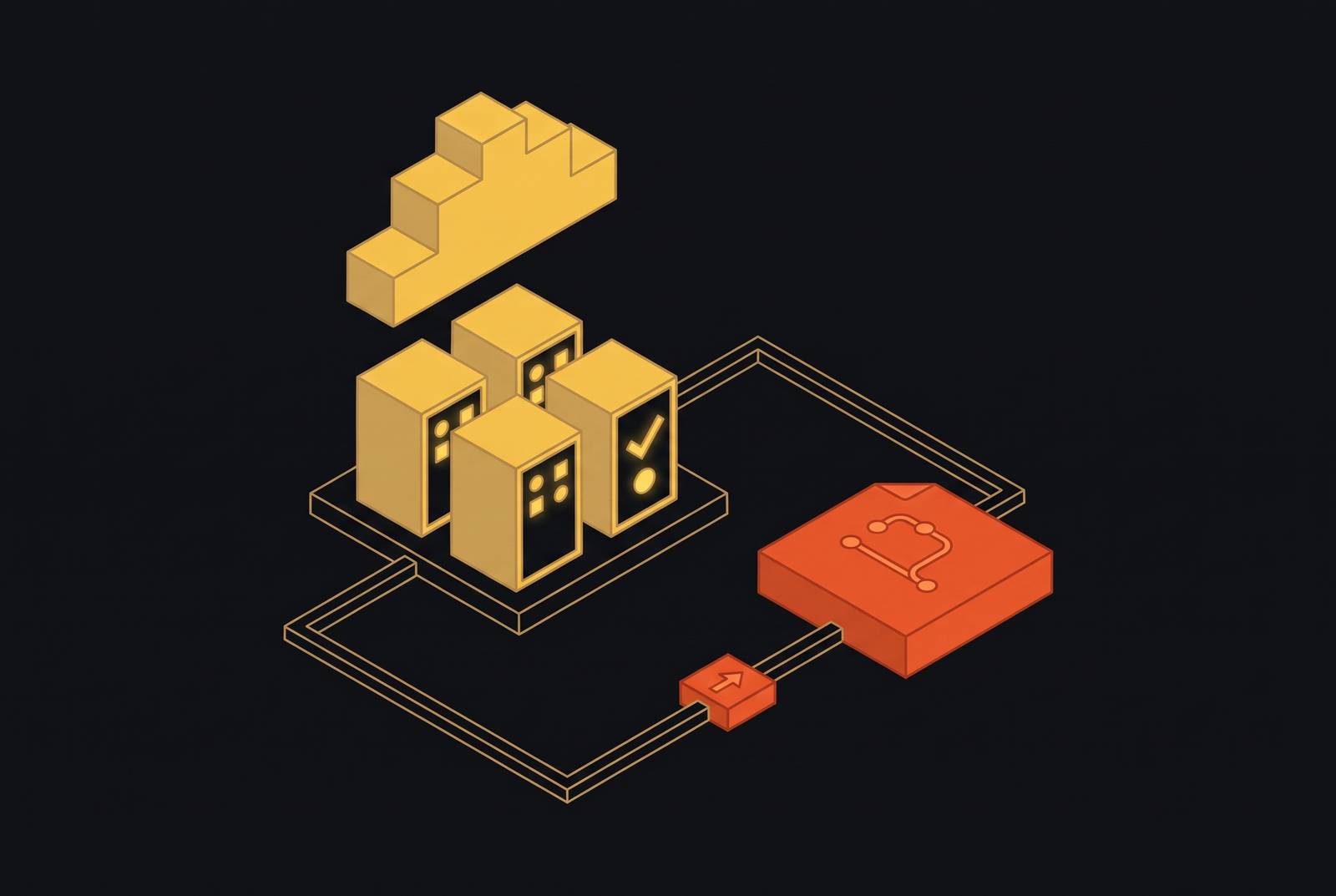
A managed cloud runner for Claude Code turns a task into a pull request that a human can review, and the session keeps running after the developer’s laptop closes. The contract includes an isolated workspace, scoped credentials, and a branch that reaches human review before deployment. Buyers who want a bring-your-own API key cloud coding agent runner need support for their key as well as this execution contract.
What a managed cloud runner actually does when Claude Code finishes
An interactive cloud session pairs one Claude Code conversation with an environment for one task. In the default Anthropic-hosted configuration, that environment is an isolated Ubuntu VM. It clones the selected repository onto a new branch, runs the environment’s setup script, and gives the agent a workspace in which to make changes.
When the agent pushes its changes, the conversation remains available. A human can check the diff, leave inline comments, open a pull request, or ask for another change. This distinction is important because an interactive session can leave a branch ready for a PR, while an autonomous workflow can open the PR itself. A local session that stops with the laptop instead leaves its changes in the working tree.
Sessions can begin from claude.ai/code, the Claude mobile app, the Desktop app, a terminal, or Slack. Cloud sessions come with Pro, Max, Ultra, Team, and Enterprise plans without a separate charge for the cloud machine, but consume the same usage limits as the rest of Claude Code. Bring-your-own-key support remains unestablished by this plan-based model usage. Under the managed workflow contract, the pull request is the unit of output.
Why isolation per task, not per developer, is what makes parallel work possible
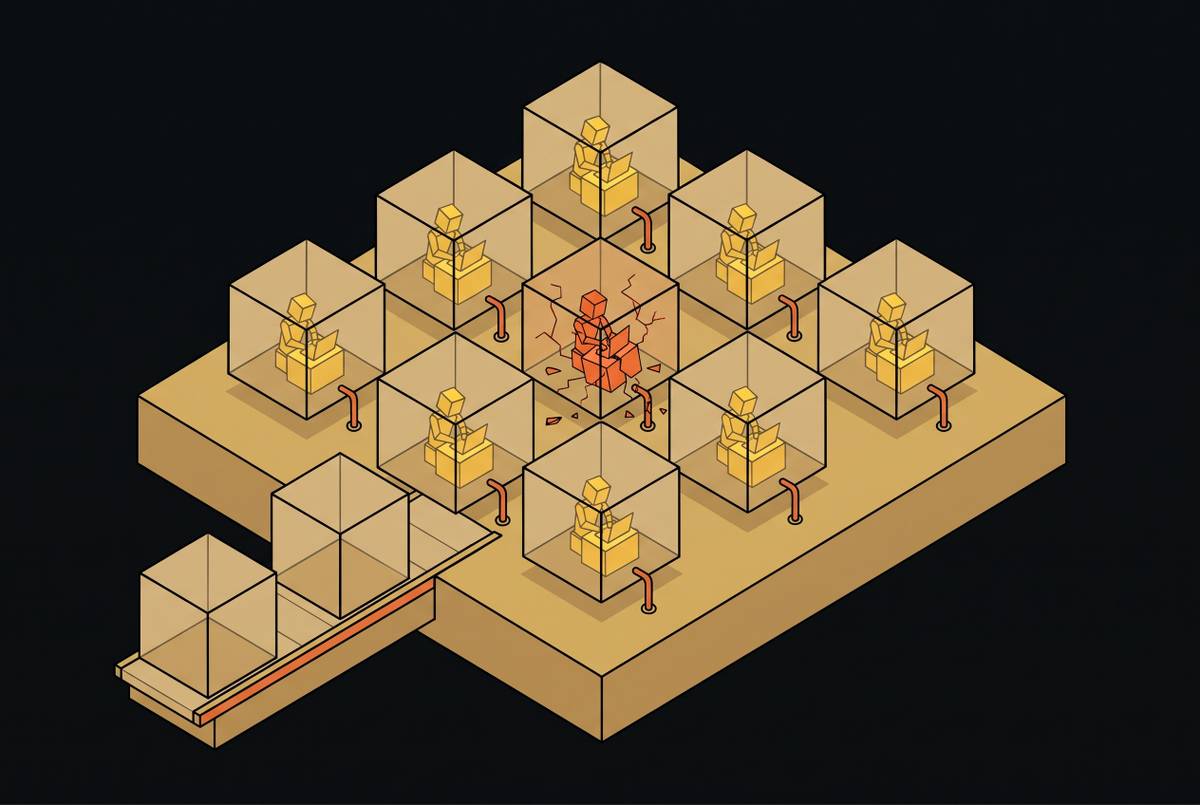
Each cloud session has its own machine, clone of the repository, and branch. Two sessions working on the same codebase therefore do not compete for the same working files or ports. Giving a developer one remote machine would not provide the same separation if several agents shared its checkout.
The tidepool example makes the distinction concrete. Three cloud sessions started within 16 seconds of each other on one repository, handling a flaky test fix, a documentation update, and a logger rewrite. All three ran and finished without interference because they had separate VMs, processes, and branches. On a shared local checkout, two agents could edit the same files and collide on a port unless the team supplied separate port assignments.
However, independent execution does not mean independent changes will merge cleanly. The logger session could not see the cache fix underway in the first session, so it independently traced and proposed the same fix. Its honest report of failures in the full suite, made without cross-session coordination, also exposed the limit of workspace separation. The rule for parallel tasks is to divide along file boundaries, because isolated machines prevent runtime collisions while leaving conflicting proposals for the same code possible.
How the full pipeline from task trigger to open pull request works
The /ultraplan command exposes the handoffs from request to review. A developer submits a task from the terminal, and Claude Code starts a planning agent on its cloud servers. The terminal returns control immediately while the plan appears in the browser at claude.ai/code. Before the agent starts the work, the developer can leave inline comments on parts of the plan. Approval is a distinct step after the initial prompt.
Accept on Web tells the session to start the work. The agent installs dependencies, writes the code, runs the tests, hits the live endpoint, commits, pushes to a new branch, and opens a GitHub pull request. The team member receives a clickable PR link and can merge, comment, or send the work back. The output has crossed from an agent conversation into the team’s review process.
There is also a deliberate fork in that sequence. Return to Terminal injects the approved plan into the local Claude Code session and executes the work there. The choice depends on the environment the task requires. Accept on Web fits a self-contained change when the sandbox can recreate the environment it needs, while Return to Terminal fits work that needs local secrets, private packages, or native dependencies the sandbox cannot reproduce.
Atlascodesai’s cloud-setup PR adds a SessionStart hook that runs scripts/cloud-setup.sh only when CLAUDE_CODE_REMOTE=true, leaving local sessions unaffected. Its CLAUDE.md documents the branch-and-PR workflow and prohibits pushing to main or running deploy scripts from a cloud session. These are explicit instructions for the agent, with access controls remaining a separate requirement. They make the expected handoff part of the repository rather than something a developer must restate with every task.
Where credentials and secrets live when the agent is working
An isolated VM bounds access by the credentials granted to that environment rather than everything available in a developer’s shell or keychain. The scope still depends on how the environment is configured, so isolation alone does not establish which services or secrets the agent may use.
For organizations on any paid Copilot plan, cloud environments can use Agents secrets and variables, and the organization can set the environment variables and access controls for them. Sessions then inherit the appropriate credentials without a developer supplying them each time.
Network placement creates a further distinction. The self-hosted runner option, in public beta in the supplied material, lets Team and Enterprise customers run sessions inside their own network. Checkouts, secrets, and build artifacts stay on customer infrastructure, and agents can reach internal services without exposing them to the public internet. Prompts, model responses, tool results, and transcripts still go to Anthropic for inference and are retained, which teams with zero data retention requirements must account for.
Repository policy adds instructions within those boundaries. The setup PR’s CLAUDE.md prohibits cloud sessions from pushing to main, running deploy scripts, or accessing production secrets. The team enforces those rules through the agent’s instructions, without a platform security feature to enforce them.
What happens when the session runs without anyone at the keyboard
Interactive, scheduled, and auto-fix sessions differ in what starts them and how they persist. An interactive session pairs a conversation with a task environment. A scheduled task runs a saved prompt and starts a fresh session for each trigger, with API calls and GitHub events also able to initiate work. Each unattended run can leave a branch and pull request for review. It does not need a developer to keep a terminal open.
Auto-fix follows a pull request that is already open. With the Claude GitHub App installed, a developer can turn on automatic fixes from the session’s CI bar at claude.ai/code so the agent responds to CI failures and review comments. The monitoring session persists until the developer stops monitoring or the session ends. That differs from both a fresh session per scheduled trigger and a session-scoped loop that runs only while its process and environment remain active.
When a new issue is reported, Linear Agent can investigate and attempt a fix before it reaches an engineer. It can gather evidence from Sentry or Datadog through MCP, trace the root cause, and produce a fix. The handoff remains a pull request or a proposed fix in the Linear issue. It is not an autonomous deployment.
Yet unattended execution can fail before the agent reaches the repository. JordiParraCrespo’s runner fix PR documents a failure in a runner that drives claude --cloud through a pseudo-terminal whose input it closes. Claude Code introduced a one-time question asking “Use this machine's settings in cloud sessions?” with choices to send settings, keep them on the machine, or defer. Nobody was present to answer the new question. On unanswered hosts, cloud starts waited until the two-minute timeout and then failed with “named no session.”
The fix adds a Prepare step before the CLI starts. It reads remoteHomeSettingsMode in ~/.claude.json and writes keep_local only if the key is unset, preserving any answer the developer already supplied. That restores the behavior cloud sessions had before the question existed. The runner also places both the question about using the machine’s settings in cloud sessions and the per-folder trust prompt in a table of blocking prompts. If either still appears after preparation, startup fails immediately with an actionable message.
A runner that drives an interactive CLI needs a table of blocking prompts that is kept up to date, so it can handle a new question without an emergency patch. Reliable startup is only one half of unattended operation, however. Under the PR-as-output contract, a human must decide to merge before deployment can happen.
What the GitHub and GitLab boundary means for teams on other hosts
Anthropic’s managed Code Review service runs on Anthropic infrastructure, posts inline comments, and supports GitHub, including GitHub Enterprise Server and Enterprise Cloud with data residency. It is restricted to Team and Enterprise plans. The CLI’s --comment flag has a different reach, posting inline comments to GitHub pull requests and a single note to GitLab merge requests. Neither has an equivalent official way to post to Bitbucket.
Bitbucket support is narrower than that review contract. The CLI’s --from-pr flag accepts a Bitbucket pull request URL to reopen sessions linked to that PR, but this does not supply managed review posting. Running /code-review against a checked-out branch works on any Git repository. For Bitbucket or other hosts, the missing handoff is getting those findings onto the pull request, which requires custom scripting or a third-party integration. Changing the settings cannot add to the hosts the managed service supports.
What engineering teams running agents at scale actually need from the runner layer
At scale, the durable decision is the environment that runs agents, governs their access, and routes their output into review. The agent itself is increasingly interchangeable. Scheduled triggers, GitHub events, Slack mentions, Linear assignments, and CI-integrated auto-fix all require execution without a developer at the keyboard. Parallel tasks across repositories add another requirement, because each task needs its own workspace without losing the common review workflow.
Governance must operate at the same level as delegation. The platform needs to have organization-level secrets, network policies, permission modes, and audit logs so engineering leaders can set what agents can reach without checking each developer’s environment. For a bring-your-own API key cloud coding agent runner, accepting the team’s key is therefore only part of the decision. It does not by itself establish workspace isolation, unattended reliability, or a supported path to the review queue.
Running Claude Code for one task, Codex for another, and Cursor for a third without changing task intake or PR review prevents the workflow from depending on a single harness. Otherwise, the team inherits that harness’s pricing, outages, and capability limits. This is a requirement for the runner layer.
Ramp, Coinbase, and Linear’s engineering team have policies for handing work to agents that send them a meaningful share of small issues. Their output goes through the same PR workflow as human-authored changes. Those outcomes require a workflow layer.
Sources
- Claude Code in the cloud: a field guide to cloud sessions / claude.dev Blog
- chore: ready for Claude cloud sessions by atlascodesai · Pull Request #2 · atlascodesai/ghost-runner-site · GitHub
- feat: Claude Code runner, Windows fixes, and workflow examples by SammyBytes · Pull Request #25 · SammyBytes/Sam · GitHub
- fix(runner): answer Claude Code's cloud settings question before claude --cloud by JordiParraCrespo · Pull Request #662 · JordiParraCrespo/oppenheimer · GitHub
- Cloud development environments for coding agents: 9 platforms compared