GitHub Issues as Zero-DevOps Agent Triggers That Hand Claude Code a Task and Return a Pull Request
Label an issue, and Claude Code opens a reviewable pull request.
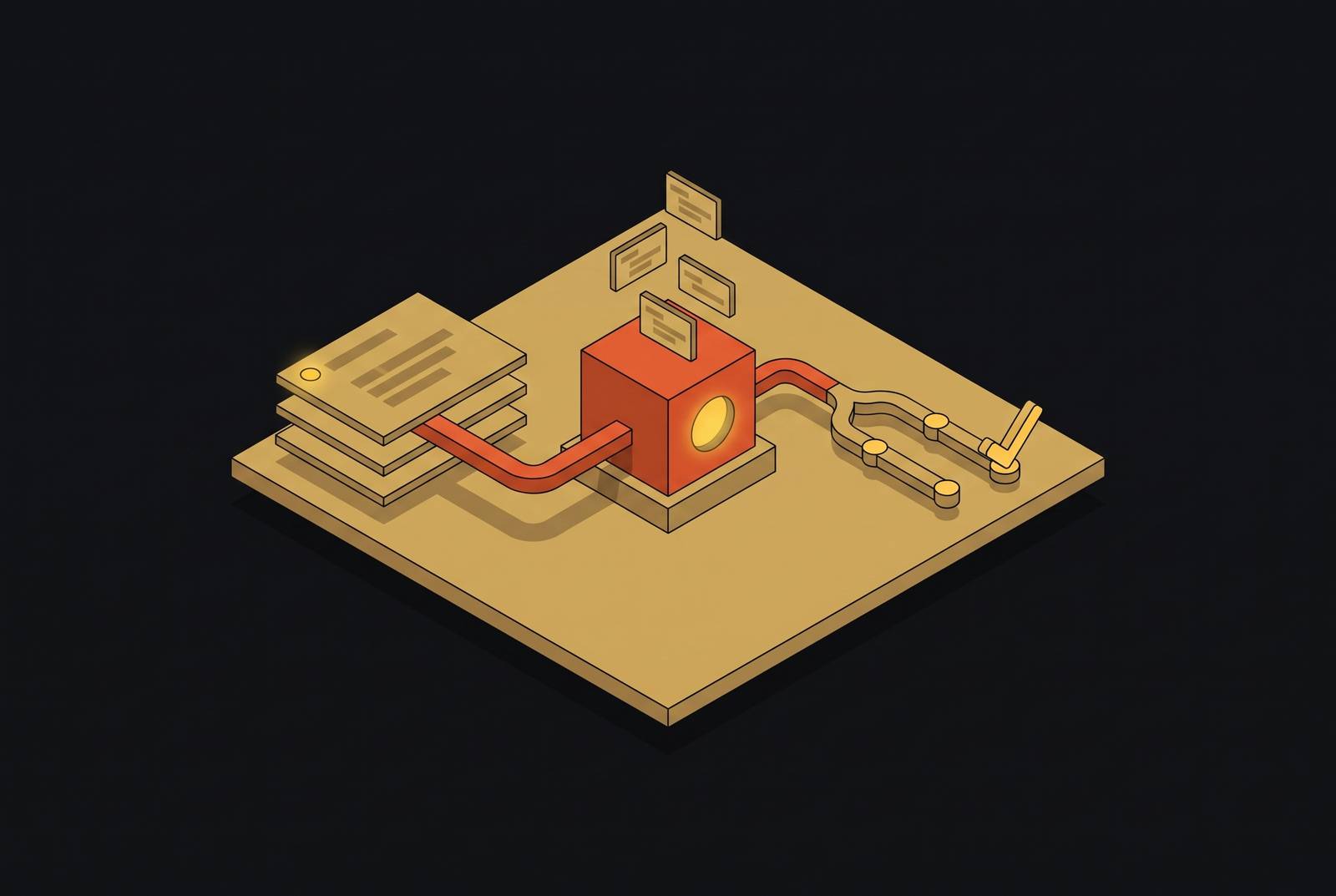
GitHub Actions can run Claude Code as a coding agent in the cloud with a bring-your-own API key setup, using an Anthropic key without a developer having to maintain a runner machine. A GitHub issue supplies the task, and the workflow returns a pull request. The reliable version of this loop depends on structured issues, scoped permissions, isolated execution, and a human review gate.
What the issue-to-PR pipeline actually is and why it changes how teams assign work
Anthropic’s Claude Code GitHub Actions documentation describes anthropics/claude-code-action@v1 running the full Claude Code runtime inside a GitHub Actions runner. This is not a thin API wrapper. The agent can read the repository, edit files, and execute the work needed to produce a pull request. GitHub provides the event and execution environment, while the issue supplies the request.
That mechanism changes the unit of assignment. Instead of handing an engineer an issue to implement, a maintainer can write a bounded task, apply a label or post a comment, and wait for a reviewable diff. A merged result still depends on approval, so the issue becomes the interface to the work without becoming permission to bypass judgment.
Which GitHub events can fire the agent and what each one is good for
The action’s trigger surface extends beyond @claude comments. Anthropic’s documentation lists issue_comment, pull_request_review_comment, pull_request_review, issues, pull_request, pull_request_target, repository_dispatch, and workflow_dispatch. These events cover task intake, review conversations, and explicitly dispatched work. Their value depends on where the request enters the repository.
For issue-driven work, issues can respond to opened and assigned events, making the issue body itself the starting context. An issue_comment event supports a later request or clarification. Review comments and submitted reviews let the agent respond within an existing code-review conversation, while workflow_dispatch provides an explicit workflow invocation. A label-driven workflow can also use the labeled issue event to gate implementation on a label such as auto-implement.
The event alone does not define the interaction. Interactive mode suits uncertain scope and expected back-and-forth, while automation mode suits templated tasks that should run without prompting. This distinction separates a conversation with an agent from a job assigned to one.
What a well-structured issue gives the agent and how issue templates encode that structure
The issue body is the agent’s primary task context. For a bug fix, it needs current behavior, expected behavior, reproduction steps, and relevant error logs. Each field serves a different purpose. Current and expected behavior define the discrepancy, reproduction steps make it actionable, and logs help locate the failure.
A bug-fix template in .github/ISSUE_TEMPLATE/ can require those fields at submission time. A completed template therefore functions as a structured prompt without requiring the submitter to write agent instructions separately.
Feature issues need a different way to set limits, with data specs, drivers, and the minimum required scope. Those details explain what must be built without prescribing every implementation choice. Context for the whole repository belongs in the root CLAUDE.md file. Together, the issue and that file give the agent both the task and the conventions under which it must work.
How to install the action and wire the required permissions without common setup failures
For installation, teams have two supported paths. The /install-github-app command inside a local Claude Code session installs the app, creates the secret, and submits workflow files as a pull request. For manual setup, teams must install the Claude GitHub App, add the secret, and copy the workflow configuration. The command supports github.com only, while GitLab has a separate CI/CD integration path.
Authentication sets how usage is billed: ANTHROPIC_API_KEY uses a Claude Console key with Console credits billed separately and no need for a subscription, while CLAUDE_CODE_OAUTH_TOKEN uses a Claude subscription and is created locally with claude setup-token. The token option is available on Pro, Max, Ultra, Team, and Enterprise plans.
Permissions are the common first-run failure point. The action needs issue write access to comment, contents write access to push commits, and pull-requests write access as well to open a pull request. A write scope also allows reads, so one permission entry is enough to read and reply to issues. The official app grants a broader set of permissions because it serves other Claude integrations too.
A Resource not accessible by integration error means the scope is too narrow for what the action tried to do. Add only the missing scope. Reading CI results additionally requires actions read access, with the action’s additional_permissions input configured for that access where required.
How the agent moves from issue context to a branch, commits, and an open pull request
The workflow starts by checking out the repository with actions/checkout@v4. It passes the issue number, title, URL, and body through environment variables referenced by the prompt. The agent then reads CLAUDE.md and relevant source files using Read and Glob before making changes with Edit and Write. This establishes the context before implementation begins.
The workflow script handles publication after the edits. It checks for a non-empty diff, creates a branch such as auto/issue-{number}, commits with an issue reference, and pushes the branch. It then calls gh pr create against main. Including Closes #{issue_number} in the PR body links the work to the issue and closes the issue on merge.
Tool access is a separate configuration decision. The claude_args field can allow tools such as Edit, Write, Read, Bash, Glob, and text-search tools, but including Bash deliberately grants shell capability. The same field can set the model, including --model claude-sonnet-4-6 for routine work. Named bots can trigger runs through allowed_bots, while bot-authored events are ignored by default to prevent feedback loops.
If the issue is already resolved or contradictory instructions leave no changes, the diff check exits cleanly as a no-op.
Running the agent autonomously on a schedule or on label, without anyone at the keyboard
A label can serve as the maintainer’s dispatch signal. With on.issues.types configured for labeled and a condition selecting auto-implement or bugfix, applying that label starts the job without an @claude mention. The condition determines which issues enter the implementation queue. It also makes the maintainer’s intent visible in the issue history.
Scheduled execution removes the need for a fresh gesture at run time. A cron-triggered workflow can query open, labeled, unassigned issues and turn that backlog into draft pull requests overnight. Event-driven repair follows a related pattern. A check_run event with a failure conclusion can supply failing test output to an agent instructed to fix the implementation without changing the tests.
These patterns run on GitHub Actions infrastructure. The session is stateless and ends when the run completes, so execution cost follows runs. “Zero-DevOps” therefore describes the absence of a machine someone must keep running, while workflow configuration and operational responsibility remain necessary.
How do isolated cloud VMs make unattended agent runs safer than local execution?
An unattended agent needs a contained place to execute. An isolated, ephemeral runner separates repository work from a developer’s machine and provides a defined lifetime for the session. GitHub Actions runners and dedicated cloud VMs supply the infrastructure for this arrangement. A shared local machine does not offer the same separation from other files and ongoing work.
Secrets still require deliberate handling inside that boundary. ANTHROPIC_API_KEY and GITHUB_TOKEN can be injected as environment secrets rather than written into repository files or committed. That avoids persistent credentials in the codebase. Isolation alone, however, is not a reason to treat unrestricted shell access as safe, so secret handling and tool restrictions remain part of the same design.
Centralized execution also gives reviewers a common audit trail. File access, shell commands, and pull-request creation belong in the run log rather than being scattered across developer machines. That record supplies evidence for security review and SOC 2 audit work. The cloud environment provides containment and visibility, while the workflow determines what the agent may do inside it.
What to configure in CLAUDE.md and the workflow prompt to get consistent, reviewable pull requests
CLAUDE.md should contain persistent project rules. These include constructor rather than field injection, DTO patterns, migration rules, off-limits branches, and folder structure. A focused file gives those rules prominence. Long preambles, vague guidance, and duplicated issue-template content dilute the instructions the agent needs during implementation.
The workflow prompt supplies the run-specific instructions. It identifies the skill to execute, how to reference the issue, what the PR body must contain, and whether tests must run before committing. Label routing can map bugfix to /bugfix, giving the agent a task-specific instruction set. A required change summary, test plan, and Closes #{issue_number} reference make the PR easier to review.
The contrast is clearest at the input boundary. A vague issue paired with a minimal conventions file leaves behavior and scope unresolved. A templated issue paired with explicit project rules defines the defect, bounds the fix, and specifies the review evidence expected at completion.
When several agents use a repository, their shared conventions belong in AGENT.md, and each agent’s own file holds the settings for its harness. This avoids rewriting the same conventions when a team adds or switches agents.
Security controls the pipeline requires before it touches a production repository
Fork handling needs an explicit workflow boundary. pull_request workflows from forks cannot read repository secrets, while pull_request_target has elevated access and needs extra care. The safest rule is never to check out fork code in a pull_request_target job. Workflows triggered by comments also need their own rules for who can run them, rather than relying on assumptions from pull-request events.
Issue text is untrusted input and must be handled that way. Passing it through a variable reference in the prompt, rather than interpolating it inline, preserves the separation between task content and workflow instructions. That provides partial mitigation. Restricting allowed tools to the minimum needed limits what a redirected agent could execute, especially where arbitrary Bash is unnecessary.
Branch protection supplies the decisive human gate. Requiring at least one human reviewer on the target branch lets the agent offer changes without merging them into main on its own. AI-assisted commit trailers and a named reviewer in the PR template also make authorship and approval distinct. Those settings support the segregation of duties required by CC8.1, whereas an auto-merge bot approving its own AI suggestions does not provide that separation.
What a working issue-to-PR pipeline looks like in a real repository and what to expect on the first run
A Spring Boot REST API example shows the workflow from issue intake to a pull request with passing CI. The developer invokes the agent workflow, and an orchestrator reads CLAUDE.md, fetches the issue, and dispatches subagents for implementation and self-review through /ultrareview. That configuration pauses at three human review gates.
The resulting pull request gives the reviewer recognizable artifacts. Its branch uses the issue number, its commit references the issue, and its body contains a Closes #N reference and a summary of changes. A configured second agent pass can add inline review comments. The reviewer can then assess the diff rather than reconstruct the task from scattered messages.
The first run also exposes configuration gaps. Missing permissions or secrets can stop publication, while an empty diff can legitimately produce no PR. After a run works, teams can make CLAUDE.md more precise, add missing fields to the issue template, and allow fewer tools.
The pipeline shifts engineers’ work from writing the first version of the code to reviewing whether the proposed change is ready to merge.